
Artificial intelligence is transforming how people search for information online. Instead of simply matching keywords, AI-powered search engines now interpret context, relationships, and user intent to deliver more accurate answers. As AI search continues to evolve through platforms like Google’s AI Overview, ChatGPT, Perplexity and other AI assistants, websites need to provide information in a format that machines can easily understand. This is where structured data becomes increasingly important. By adding structured data to your website, you help AI systems understand what your content represents rather than forcing them to infer its meaning from plain text alone. While structured data has long been associated with improving search engine optimization (SEO), it is now becoming a critical component of AI optimization, helping search engines and AI models interpret content with greater confidence.
What Is Structured Data for a Website?
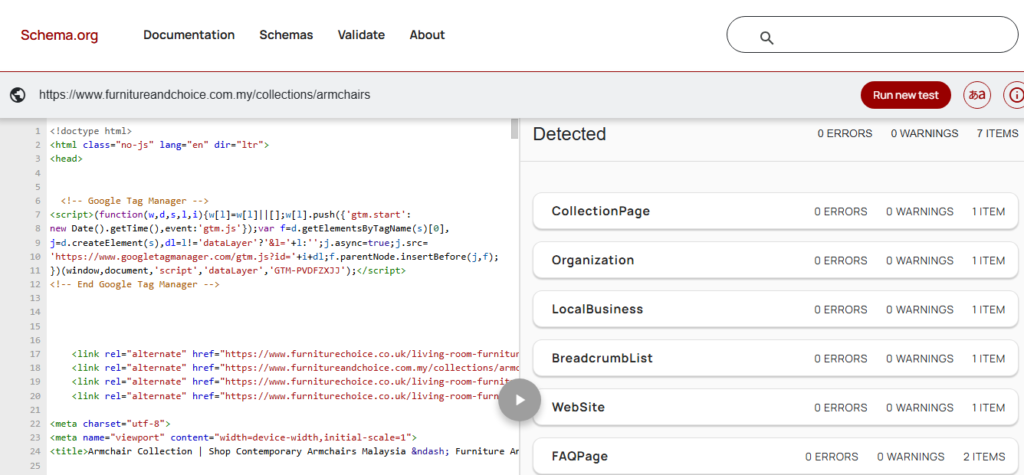
Structured data is a standardized format used to organize information on a webpage so that search engines and AI systems can understand it more accurately. Rather than relying solely on visible content, structured data provides explicit labels that explain what different pieces of information mean.
For example, instead of simply displaying a product name, price, and customer rating as text, structured data identifies each element individually. This allows machines to recognize that one value is a product name, another is a price, and another represents customer reviews.
Most websites implement structured data using Schema.org vocabulary, typically written in JSON-LD format. This structured markup acts like a translator between your website and search engines, making your content easier to interpret.
Common structured data types include:
- Organization
- Local Business
- Product
- Article
- FAQ
- Recipe
- Event
- Person
- Breadcrumb
- Review
- Video
Each schema type provides additional context that helps AI understand the purpose and meaning of your content.
Why Is Structured Data Important for AI?
Artificial intelligence relies on data to understand the world. Although AI has become much better at interpreting natural language, structured data removes much of the uncertainty by providing clear definitions about the information on your website.
Without structured data, AI must analyze headings, paragraphs, images, and surrounding context to determine what a page is about. While modern AI is capable of doing this, there is still room for ambiguity, especially when similar terms have different meanings.
Structured data helps AI by:
- Identifying entities such as products, businesses, people, and locations
- Defining relationships between different pieces of content
- Clarifying page purpose and content hierarchy
- Improving confidence when summarizing information
- Reducing the risk of misinterpreting important details
For example, a product page containing a sofa could include structured data that specifies the product name, material, dimensions, color, price, availability, and customer ratings. AI no longer has to guess whether those details belong to the product or another section of the page.
The clearer your information is, the more confidently AI can reference your content when generating responses.
What Is Structured Data for AI Search?
AI search goes beyond matching keywords. Instead, it aims to answer complex questions by combining information from multiple trusted sources. Structured data helps AI search engines quickly identify factual information and understand how different pieces of content relate to one another.
Unlike traditional search engines that primarily rank webpages, AI search systems often summarize information into conversational answers. To create accurate responses, they need structured signals that confirm:
- What the page is about
- Who published it
- Whether the information is current
- Which products or services are mentioned
- How different entities connect
Structured data supplies these signals in a machine-readable format, making it easier for AI systems to extract accurate information while reducing uncertainty.
As AI-generated search experiences continue to grow, structured data provides websites with a stronger foundation for being understood and accurately represented.
Does AI Use Structured or Unstructured Data?
The simple answer is both.
Most website content, including blog articles, product descriptions, images, and videos, is considered unstructured data because it does not follow a predefined format that machines can immediately interpret.
Structured data, on the other hand, organizes specific information into clearly defined fields that computers can process efficiently.
AI uses unstructured data to understand context, language, tone, and meaning. At the same time, it relies on structured data to verify facts, identify entities, and establish relationships between different pieces of information.
Think of it this way:
- Unstructured data tells AI the story.
- Structured data explains the facts behind the story.
When both work together, AI gains a more complete understanding of your content.
🧠 How Structured Data Improves AI Understanding
Structured data provides clearer signals that help AI systems interpret your website, identify important information, and deliver more accurate answers to users.
Helps AI Recognise Entities
Structured data helps AI identify important entities such as businesses, products, authors, and locations, allowing systems to understand exactly what your content represents.
Creates Content Relationships
AI can better understand how different information connects, such as a product belonging to a brand or an article being written by a specific author.
Improves Information Accuracy
Clear structured signals reduce ambiguity and help AI interpret important details more accurately when generating search results or answers.
Enhances Content Visibility
By making content easier for AI and search engines to understand, structured data improves the chances of your website being discovered across search experiences.
Types of Structured Data That Matter Most
Not all structured data serves the same purpose. Different schema types provide AI systems and search engines with specific information about your website, helping them understand your content, products, services, and business details more accurately.
Choosing the right structured data depends on your website type, industry, and the information you want AI systems to recognize. Some of the most valuable schema types include:
🏢 Organization Schema
Organization Schema helps AI identify important details about your brand, including your company name, logo, contact information, and online presence. It allows AI systems to better understand your business identity and connect your website with the correct entity.
🛒 Product Schema
Product Schema provides AI with structured details about your products, such as names, descriptions, prices, availability, images, reviews, and specifications. This helps AI understand product information more accurately and provide relevant answers for shopping searches.
✍️ Article Schema
Article Schema helps AI understand informational content by identifying details such as the article title, author, publication date, topic, and publisher. It provides additional context that makes it easier for AI systems to categorize and interpret your content.
📍 Local Business Schema
Local Business Schema helps AI understand location-based business information, including addresses, opening hours, contact details, service areas, and business categories. This makes it easier for AI to provide accurate answers for local searches.
❓ FAQ Schema
FAQ Schema organises common questions and answers into a machine-readable format. It helps AI quickly identify useful information and understand how your content addresses specific user queries.
🧭 Breadcrumb Schema
Breadcrumb Schema helps AI understand your website structure by showing relationships between different pages and categories. It provides context about where a page fits within your overall website hierarchy.
⭐ Review Schema
Review Schema provides AI with structured information about customer feedback, ratings, and testimonials. It helps systems understand the relationship between reviews and the products, services, or businesses being evaluated.
🎥 Video Schema
Video Schema helps AI interpret video content by providing details such as video title, description, thumbnail, duration, and creator information. This allows AI systems to better understand when video content may be relevant to user searches.
Best Practices for Implementing Structured Data
To maximize the benefits of structured data, follow these best practices:
- Use Schema.org vocabulary.
- Implement JSON-LD whenever possible.
- Match structured data with visible page content.
- Avoid adding misleading or inaccurate markup.
- Keep product prices and availability updated.
- Include author information for informational content.
- Validate your markup using structured data testing tools.
- Regularly review your schema after website updates.
Accurate structured data builds trust with both search engines and AI systems.
Structured Data Is Becoming Essential for AI SEO
As search continues shifting toward AI-generated answers, structured data is evolving from a technical SEO enhancement into a core component of AI optimization.
AI systems need clear, reliable signals to understand webpages, connect entities, and generate accurate responses. Structured data provides those signals by giving machines a standardized framework for interpreting content.
While structured data alone will not guarantee that your website appears in AI-generated answers, it significantly improves your content’s clarity, credibility, and machine readability. Combined with high-quality content, strong technical SEO, and a positive user experience, structured data helps position your website for greater visibility in both traditional search results and emerging AI search experiences.
The Future of Structured Data in AI Search
AI search is changing how websites are discovered, understood, and recommended. Instead of relying solely on keywords, AI evaluates context, relationships, and structured information to deliver more accurate answers to users.
By implementing structured data correctly, you make it easier for AI to interpret your content, recognize your expertise, and understand the purpose of each page. Whether you run an ecommerce store, a local business, or a content-driven website, structured data is an investment that supports both current SEO performance and long-term success in AI-powered search.
As AI becomes an even larger part of the search landscape, websites that provide clear, well-organized, and machine-readable information will be better positioned to earn visibility, trust, and organic traffic.