Mobile app marketing has become increasingly competitive, making it essential for businesses to understand where their users come from, which campaigns drive meaningful engagement, and how effectively their advertising budgets are being spent. As acquisition channels multiply and mobile advertising fraud becomes more sophisticated, app marketers need more than download figures to make informed decisions.
Adjust is a mobile measurement platform that helps businesses measure campaign performance, understand user acquisition, and protect attribution data against fraudulent activity. By bringing attribution, analytics, and fraud prevention capabilities together, Adjust enables marketing teams to evaluate campaign outcomes and make more informed decisions about their growth strategies.
For businesses looking to improve mobile marketing performance, understanding how Adjust works, what its fraud prevention capabilities offer, and whether it suits their measurement requirements is an important first step.
What Is Adjust and How Does It Support Mobile App Marketing?
Adjust is a mobile measurement partner (MMP) that helps app marketers connect advertising activity with app installs and subsequent user actions. Rather than relying solely on download counts reported by individual advertising platforms, businesses can use attribution data to understand which marketing sources are associated with their results.
For example, an e-commerce company promoting its shopping app across social media, search advertising, and affiliate networks needs to understand which channels bring in users who register, browse products, and complete purchases. Adjust helps marketers connect eligible advertising interactions with app installs and other measurable outcomes, subject to the attribution methods and available data.
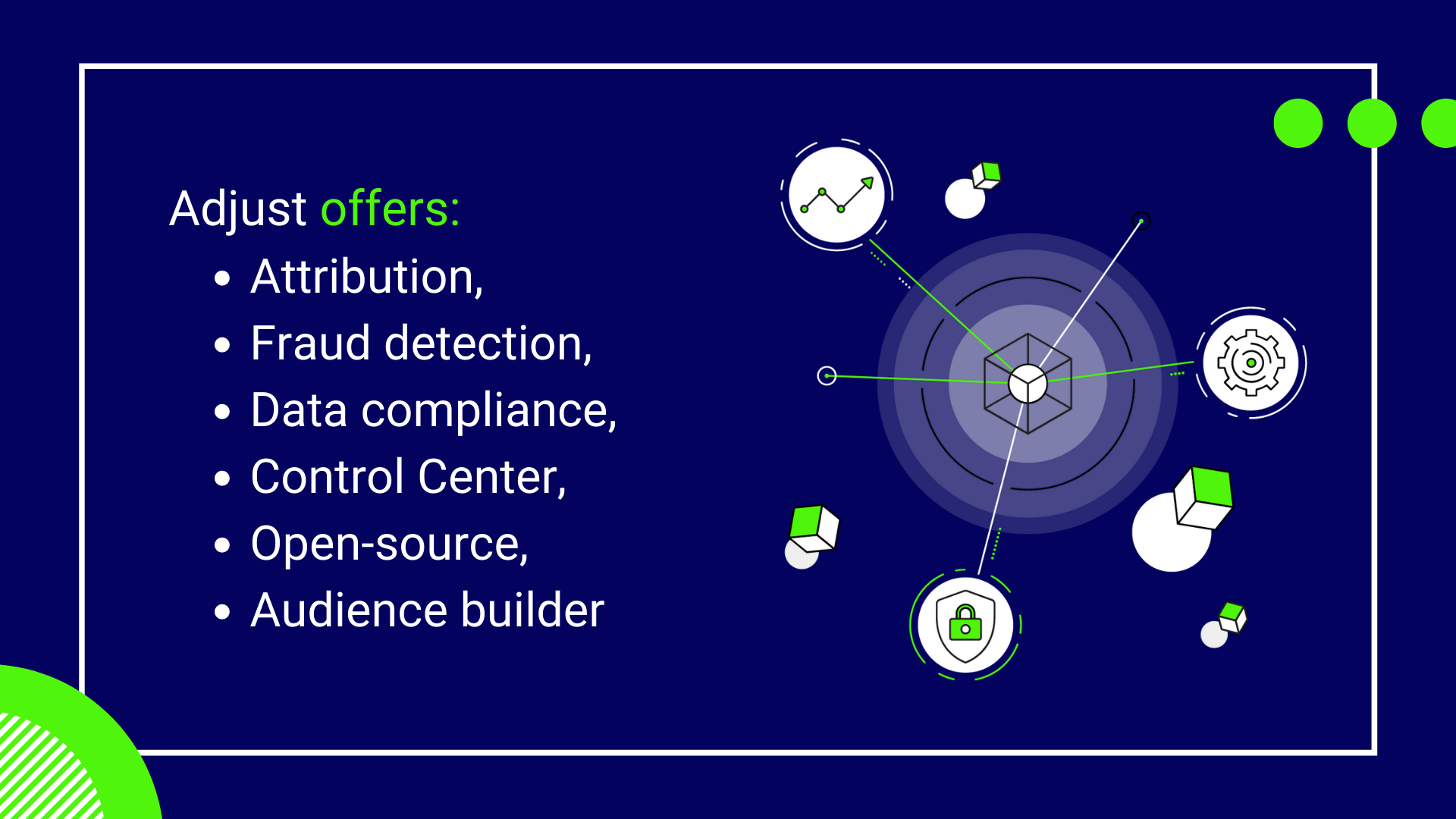
Its capabilities support several important areas of mobile marketing:
- Mobile Attribution: Understand which eligible advertising interactions receive credit for app installs and re-engagement.
- Campaign Measurement: Compare acquisition performance across advertising channels, campaigns, and partners.
- User Behaviour Analysis: Evaluate post-install events to better understand how users interact with an app.
- Fraud Prevention: Identify and reject suspicious traffic that could distort attribution and campaign reporting.
- Marketing Optimisation: Use measurement insights to inform budget allocation, creative testing, and user acquisition strategies.
These capabilities help marketing teams move beyond measuring app downloads alone. They can assess whether campaigns attract users who contribute to longer-term business objectives, such as purchases, subscriptions, registrations, or repeat engagement.
How Does Adjust Handle Mobile Attribution and Campaign Measurement?
Mobile attribution helps marketers understand the relationship between advertising interactions and subsequent app activity. It provides a framework for evaluating campaign performance across multiple acquisition channels, although attribution does not automatically establish that an advertisement caused every conversion.
Adjust supports deterministic attribution and probabilistic modelling for clicks and impressions, depending on the conversion type, available signals, and applicable measurement conditions.
1. Connecting App Installs to Marketing Sources
When a user interacts with an advertisement and subsequently installs an app, Adjust uses supported attribution methods to determine which eligible source should receive credit.
Deterministic attribution can use matching identifiers, such as advertising IDs when available, to connect an advertising interaction with an install. Adjust also supports referrer-based matching in applicable environments. Probabilistic modelling may be used where appropriate, depending on the available data and measurement circumstances.
This allows marketers to analyse acquisition performance without depending exclusively on separate reporting systems from every advertising partner.
2. Measuring What Happens After Installation
An app download is only the beginning of the customer journey. Depending on how an app and its measurement setup are configured, marketers can measure post-install events such as account registration, product purchases, subscription starts, and other meaningful actions.
These events help businesses distinguish between campaigns that generate large numbers of installs and those that attract users who engage with the product.
For example, a mobile gaming company might discover that one campaign attracts many new players, while another generates fewer installs but a higher proportion of players who return and make in-app purchases. This insight can inform acquisition decisions based on user quality rather than download volume alone.
3. Comparing Campaign Performance Across Channels
A consistent measurement framework makes it easier to compare campaigns across supported advertising networks and partners.
Marketing teams can examine metrics such as cost per install (CPI), cost per acquisition (CPA), conversion rates, retention, and return on ad spend (ROAS), provided the necessary cost and event data are available.
The objective is not simply to identify the channel with the cheapest installs. It is to understand which campaigns contribute to the outcomes that matter most to the business.
4. Working Within Today’s Privacy and Measurement Environment
Mobile measurement is increasingly shaped by privacy requirements, platform policies, and restrictions on access to device identifiers. iOS and Android may provide different attribution signals, while user consent and privacy settings can affect the data available for measurement.
Adjust’s attribution methods accommodate different matching and modelling approaches, but no measurement platform can guarantee complete visibility into every user journey.
For app marketers, this means interpreting attribution reports alongside other evidence, including advertising platform reporting, aggregate measurement, retention analysis, and incrementality testing where appropriate.
Understanding Adjust Fraud Detection: How Does It Identify Suspicious Mobile Traffic?
Mobile advertising fraud occurs when invalid or manipulated activity is used to generate advertising interactions, installs, or in-app events that do not represent genuine marketing performance.
Fraudulent activity can inflate reported acquisition numbers, divert advertising budgets, and compromise the data used to evaluate campaign effectiveness. It can also make legitimate publishers appear less competitive when their results are compared with inflated figures from fraudulent sources.
Adjust’s Fraud Prevention Suite is designed to identify and prevent several forms of mobile advertising fraud, helping protect attribution data before fraudulent activity distorts campaign reporting.
According to Adjust’s official product documentation, its fraud prevention capabilities address multiple types of suspicious activity through filters and validation mechanisms. Availability depends on the features included in the account and the configuration of the app.
Common Types of Mobile Advertising Fraud
Click Injection
Click injection occurs when fraudulent software or activity generates an advertising click around the time an app installation is taking place, potentially stealing attribution credit from the legitimate source.
Adjust’s click injection filtering uses timing information to identify ineligible engagements. This helps prevent fraudulent clicks from receiving credit for installs in supported environments.
Click Spamming
Click spamming involves generating large volumes of artificial clicks in an attempt to claim credit for installs that may have occurred organically or through another legitimate marketing source.
Adjust uses distribution modelling to analyse click patterns and identify suspicious engagement activity. This helps reduce the risk of organic installs being incorrectly attributed to fraudulent sources.
SDK Spoofing
SDK spoofing involves falsifying or replicating communications associated with an app’s software development kit (SDK) to generate fake installs or in-app activity.
Adjust’s SDK Signature technology helps verify the authenticity of supported SDK communications, making it more difficult for fraudulent actors to submit fabricated activity.
Device Farms and Suspicious IP Traffic
Device farms use physical devices or emulated environments to generate artificial advertising interactions and installs. Some operations rely on data centres, proxies, or other anonymised network infrastructure.
Adjust’s anonymous IP filtering and behavioural anomaly filtering help identify traffic associated with suspicious network characteristics or abnormal activity patterns.
Malformed Advertising IDs
Advertising identifiers that do not follow expected formats can indicate invalid or fabricated traffic.
Adjust’s malformed advertising ID filter identifies and rejects installs with incorrectly formatted identifiers. According to its documentation, this filter is automatically enabled for Adjust clients.
No individual filter can identify every possible form of fraud. Combining multiple detection methods provides a broader approach to protecting campaign measurement.
Adjust Fraud Prevention: How Can It Help Protect Marketing Budgets?
Fraud prevention is not just about removing suspicious installs from a report. It also helps preserve the quality of the data that marketers use to make spending decisions.
Adjust’s Fraud Prevention Suite focuses on preventing fraudulent traffic from being attributed to paid channels, rather than relying exclusively on identifying questionable activity after campaigns have run.
Here are several ways this can support app marketing teams.
1. Reduce Exposure to Invalid Traffic
Fraudulent clicks and installs can consume advertising budgets without delivering genuine customers. By identifying and rejecting eligible fraudulent activity, Adjust helps reduce the risk of paying for invalid acquisition outcomes.
The actual savings depend on the amount and type of fraud affecting a campaign, the filters enabled, and the commercial arrangements with advertising partners.
2. Maintain More Reliable Attribution Data
If fraudulent activity receives credit for installs, marketers may overestimate a campaign’s contribution and underestimate the performance of legitimate sources.
Filtering suspicious engagements helps improve the reliability of attribution data, making it easier to evaluate which channels are delivering valid acquisition outcomes.
3. Improve Campaign Optimisation Decisions
Marketing teams often use campaign performance data to decide where to increase spending, reduce budgets, or test new audiences.
When the underlying data is distorted, these decisions can lead to wasted investment. More reliable attribution helps teams make optimisation decisions using a clearer view of eligible campaign activity.
However, fraud prevention alone does not guarantee better ROAS. Campaign results still depend on factors such as media costs, creative quality, audience targeting, product experience, and user retention.
4. Investigate Suspicious Traffic Sources
Adjust’s Protection Dashboard provides visibility into rejected and unverified activity, including breakdowns associated with relevant fraud filters and validation mechanisms.
Depending on the features enabled, marketers can use these reports to investigate rejection trends, identify traffic sources with unusually high rejection volumes, and review the reasons behind filtered activity.
This helps teams move from simply observing unusual campaign results to investigating the potential causes and deciding what action to take.
5. Apply Rules That Reflect Business Requirements
Adjust’s Conversion Rules can help businesses define conditions for evaluating traffic based on factors such as app, region, event, store, or SDK version, subject to the supported configuration.
This allows teams to apply measurement and validation logic that reflects their business requirements instead of treating all incoming activity in the same way.
For instance, a company running campaigns in several markets may need different validation rules for different regions or app versions. Appropriate configuration can help align measurement practices with those operational needs.
What Makes Adjust Relevant in the Evolving Mobile Fraud Landscape?
Mobile advertising fraud continues to evolve alongside advertising technology. In 2026, AI-assisted automation and increasingly sophisticated bots have added to the challenge of distinguishing genuine engagement from artificial activity.
Fraudulent traffic may imitate normal user behaviour, generate more convincing interaction patterns, or exploit weaknesses across advertising and app ecosystems. This makes it harder to rely on simple rules, such as unusually high click volumes, as the sole indicator of suspicious activity.
Adjust’s August 2026 discussion of mobile ad fraud highlights the need for more proactive approaches, including multiple detection signals and prevention at the attribution stage.
For app marketing teams, three considerations are particularly important:
- Fraud prevention should be proactive. Identifying suspicious activity before it influences attribution can help limit the impact on campaign decisions.
- Detection should use multiple signals. Timing patterns, identifier validation, SDK authenticity, network characteristics, and behavioural anomalies can provide complementary evidence.
- Monitoring should continue after implementation. Fraud patterns change, so teams should regularly review rejection trends and campaign quality rather than assume that initial configuration will remain sufficient.
Adjust’s Fraud Prevention Suite addresses several established fraud patterns, but businesses should still evaluate its coverage against their particular markets, traffic sources, app environments, and emerging threats.
Is Adjust Worth It for Mobile App Marketing Teams That Need Reliable Attribution and Campaign Measurement?
Adjust can be a worthwhile option for businesses that need a consistent approach to mobile attribution, campaign analysis, and fraud prevention. However, its suitability depends on the complexity of the marketing operation, the measurement challenges the business faces, and the capabilities included in its chosen solution.
When Adjust May Be a Good Fit
Businesses running campaigns across multiple channels
Teams advertising through several networks and partners may benefit from a common measurement framework for evaluating acquisition and post-install performance.
Apps with substantial user acquisition spending
Businesses investing heavily in paid app installs may find fraud prevention particularly valuable because invalid traffic can affect both their budgets and the reliability of their performance reports.
Teams focused on user quality and long-term value
Companies that measure registrations, subscriptions, purchases, retention, or other post-install outcomes can use attribution data to evaluate more than the initial download.
Marketing teams that need visibility into suspicious activity
Businesses that regularly encounter unexplained attribution changes or unusual traffic patterns may benefit from fraud monitoring and rejection reporting.
When Should Businesses Evaluate Other Options?
Adjust may not be the right choice for every organisation. Businesses with simple acquisition requirements, limited measurement needs, or tight budgets should compare the platform’s available features and pricing against their actual requirements.
Before committing, teams should consider:
- Whether the attribution methods support their target platforms and advertising partners.
- Whether the fraud prevention features they need are included in the proposed package.
- How easily Adjust integrates with their app, data warehouse, analytics tools, and existing marketing systems.
- Whether the reporting meets their requirements for cost analysis, post-install events, retention, and revenue measurement.
- The total cost of implementation, ongoing use, support, and any additional features.
It is also important to distinguish between attribution accuracy and incremental impact. Attribution helps assign credit according to defined measurement rules, while incrementality testing helps assess whether advertising generated outcomes that would not otherwise have occurred.
For businesses making significant investment decisions, using both approaches where appropriate can provide a more complete understanding of campaign effectiveness.
Ultimately, Adjust’s value should be assessed against measurable business outcomes, including the quality of acquisition data, the ability to investigate suspicious traffic, the efficiency of campaign analysis, and the team’s capacity to act on the resulting insights.