
In large companies, SEO is a team sport. There are technical specialists, content strategists, developers, analysts, and project managers. Everyone has a lane and their own roles.
In a small agency, there is usually one person: that person is the generalist marketer. What are they doing?
- They’re running paid ads in the morning.
- Fixing CRM automations before lunch.
- Replying to client emails in between meetings.
- Writing landing pages at 4 PM.
- Reviewing reports at 8 PM.
And somewhere in that chaos, they’re expected to “handle AI SEO.”
The Hidden Pressure on the Generalist Marketer
Small agencies survive on versatility. The same person might manage Google Ads, Meta campaigns, email flows, analytics dashboards, website edits, and client calls.
Now add AI-driven search into that mix.
AI SEO is not just “write better blog posts.” It requires thinking about structure, context, internal linking, data clarity, and how machines interpret information. It leans into engineering thinking: systems, architecture, and consistency.
But the generalist marketer is operating in survival mode. They don’t have three uninterrupted hours to rethink site architecture. They have 20-minute windows between Team messages.
They don’t have a development team ready to deploy structured changes, they have limited CMS access and a to-do list that keeps growing.
This creates a real constraint.
Not a lack of skill.
Not a lack of intelligence.
But a lack of focused bandwidth.
AI Changed the Rules and Raised the Bar
Traditional SEO used to be slower. You could publish a blog post, build a few links, tweak some keywords, and wait.
Today, that’s not how it works anymore.
Search engines are now powered by AI. They interpret meaning, context, intent, relationships between topics. Content is no longer judged just by keywords, but by how clearly it answers questions and how well it fits into a bigger content ecosystem.
This means SEO now demands:
- Clear structure
- Logical topic grouping
- Consistent formatting
- Clean internal linking
- Strong content hierarchy
In other words, it demands systems thinking.
And systems thinking is hard when you’re constantly switching tasks.
Context Switching Is the Real Enemy
Small agency marketers rarely work in deep focus. Their day looks like this:
- Check ad performance
- Jump into client call
- Fix broken email automation
- Approve social media post
- Answer urgent messages
- Review landing page copy
- Look at search rankings
Each task pulls the brain in a different direction.
AI SEO, however, needs continuity. It needs you to zoom out and see how page A connects to page B, how blog clusters support service pages, how messaging aligns across the site.
That kind of thinking doesn’t happen well in fragmented time blocks.
So what usually happens?
SEO becomes reactive.
Small fixes.
Quick updates.
Random blog posts.
No real structure. No repeatable model.
The Old SEO Model Doesn’t Fit Small Agencies Anymore
In bigger organizations, SEO often involves detailed audits of every page, long reports, technical deep dives, and weeks of recommendations.
That approach simply does not scale inside a small agency.
You cannot:
- Perform high-touch manual audits for every page
- Rebuild site architecture every quarter
- Spend weeks crafting one pillar page
There isn’t time. There isn’t budget. There isn’t a dedicated team.
So if AI SEO is going to work in a small-agency environment, it has to adapt to reality.
What AI SEO Must Look Like in a Small Agency
For small teams, AI SEO must be:
1. Lightweight
It should not require massive documentation or endless analysis.
Simple frameworks beat complex playbooks.
- Clear content templates.
- Simple page structures.
- Defined internal linking rules.
If it feels heavy, it won’t get implemented.
2. Structured
Every page should follow a predictable format.
- Same heading logic.
- Same content flow.
- Same linking pattern.
Structure reduces decision fatigue. It also helps search systems understand your site faster.
3. Repeatable
If a strategy only works when you personally execute it with full focus, it’s fragile.
Instead, you need repeatable systems:
- A standard way to create service pages
- A consistent blog-to-service linking model
- A fixed content update checklist
Repeatability protects you when you’re tired or rushed.
4. Tool-Assisted
Small teams cannot manually analyze everything.
AI tools should assist with:
- Content outlines
- Gap identification
- Internal linking suggestions
- Search intent mapping

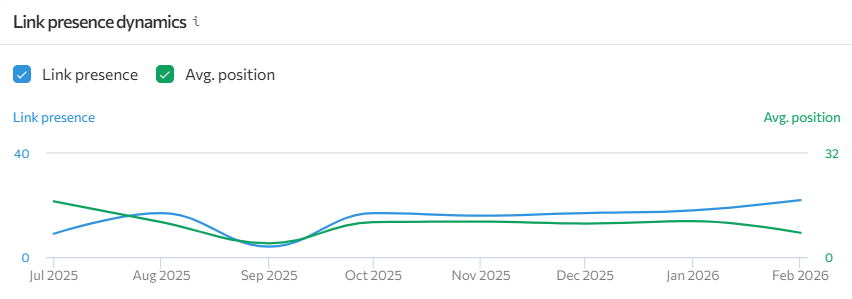
The marketer becomes the decision-maker, not the one doing every micro-task manually.
(Read more HERE)
5. Architecturally Consistent
This is where most small agencies struggle.
Without a clear site architecture, content becomes scattered. Pages compete against each other. Topics overlap. Authority gets diluted.
Architectural consistency means:
- Clear topic clusters
- Defined primary service pages
- Supporting articles that reinforce, not compete
- Logical navigation and hierarchy
It’s not about perfection. It’s about coherence.
The Operating Model Must Match Real Life
Here’s the uncomfortable truth:
AI SEO in small agencies must expect partial attention.
It must expect that the marketer:
- Will be interrupted
- Will switch between projects
- Will sometimes only have 30 minutes to move things forward
So the system must be built for short working sessions.
If progress requires three hours of deep technical thinking, it won’t happen.
But if progress can happen in structured blocks: update one section, improve one cluster, refine one page template. It becomes manageable.
Really, AI SEO becomes something you iterate on, not something you overhaul.
The Real Shift: From Campaign Thinking to System Thinking
Many small agencies approach SEO like they approach ads: as a campaign.
Launch. Optimize. Report.
But AI SEO works better as infrastructure.
It’s closer to building plumbing than running a promotion.
You don’t “run” AI SEO.
You design it once.
You refine it slowly.
You maintain consistency.
That mindset shift alone reduces pressure.
Instead of chasing rankings every week, you focus on strengthening structure.
Instead of publishing random content, you reinforce your architecture.
Final Thoughts: It’s Not About Doing More
Small agency marketers are not failing at AI SEO because they’re behind.
They’re overloaded.
The solution isn’t to work longer hours or learn ten new technical skills.
The solution is to design an AI SEO model that respects constraints:
- Limited time
- Frequent interruptions
- Broad responsibilities
- No dedicated SEO team
When AI SEO becomes lightweight, structured, repeatable, tool-assisted, and architecturally consistent, it stops being a burden.
It becomes a system that works quietly in the background — even when you’re busy running ads, fixing CRM workflows, and replying to client emails.
And in a small agency, that’s the only kind of system that survives.