
Search is no longer just about rankings. As AI powered systems reshape how information is interpreted and delivered, visibility now depends on how well content is understood by machines, not just indexed. For SEO consultants, this shift changes how performance must be measured and optimized.
AI visibility tools have emerged to address this transformation. They are designed to evaluate how content performs inside AI-influenced search environments where semantic relevance, entity relationships, and contextual intent matter more than traditional keyword placement.
Understanding how these tools work and how to measure their impact is becoming essential for consultants who want to maintain competitive advantage.
What AI Visibility Tools Actually Measure
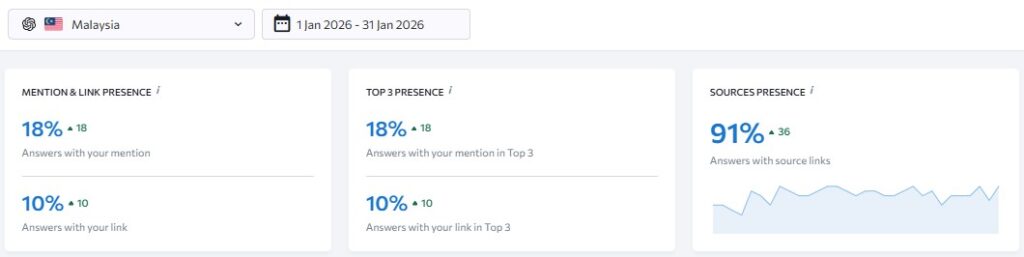
Traditional SEO platforms focus heavily on rankings, backlinks, and keyword data. AI visibility tools go further. They assess how content is interpreted by machine learning systems that power search engines and AI generated results.
These tools analyze:
• Semantic depth and topical coverage
• Entity relationships within content
• Alignment with search intent clusters
• Inclusion in AI influenced search features
• Comparative performance across competitors
Instead of asking where a page ranks, they ask whether the content satisfies the intent behind a query and whether it is structured in a way that AI systems can confidently extract, summarize, and recommend.
For consultants, this provides a more realistic indicator of future search performance.
How AI Visibility Tools Work
AI visibility tools combine large scale data aggregation with natural language processing models. First, they collect search result data across thousands of queries, including features influenced by AI such as summaries, related questions, and contextual expansions.
Then they analyze content structure, topical breadth, internal linking patterns, and semantic relationships. Rather than counting keyword density, they evaluate whether the content demonstrates subject authority through comprehensive coverage and contextual alignment.
Many platforms also compare your content against top performing competitors to identify semantic gaps. This gap analysis highlights missing subtopics, weak entity associations, or insufficient depth.
For SEO consultants, this transforms optimization from tactical keyword insertion into strategic content architecture.
How to Measure AI Visibility
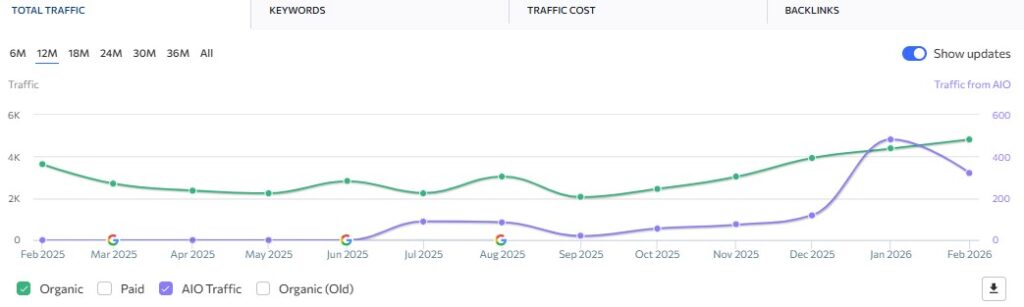
Measuring AI visibility requires a broader framework than traditional ranking reports. Consultants should focus on performance signals that reflect how AI systems evaluate content authority and usefulness.
Key measurement areas include semantic coverage scores, entity saturation within topic clusters, inclusion in AI influenced search features, and query intent alignment rates.
It is also critical to monitor content performance across informational, navigational, and transactional intent categories. AI systems reward clarity and completeness, so visibility increases when content consistently satisfies layered intent structures.
Competitive benchmarking is equally important. Measuring share of voice within topic clusters provides a clearer understanding of how your content ecosystem performs relative to others targeting the same semantic space.
This approach aligns more closely with how search engines are evolving.
How to Measure the Impact of AI on Content Performance

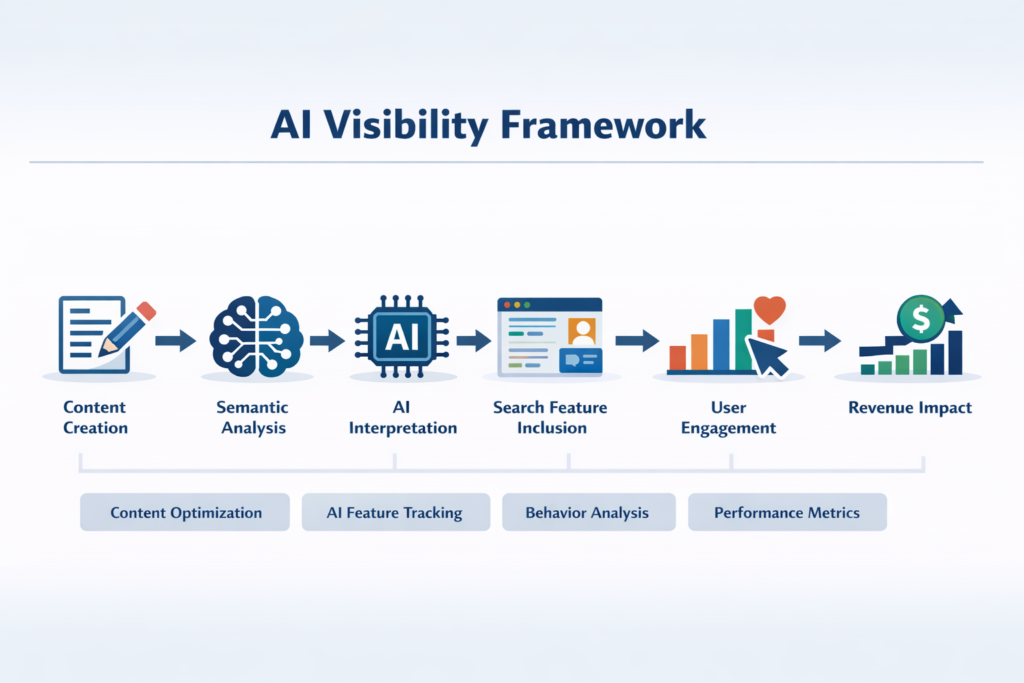
AI visibility should translate into measurable business outcomes. The impact can be assessed by connecting semantic improvements with behavioral and conversion metrics.
For example, when content gains stronger alignment with search intent, consultants often observe improvements in dwell time, engagement depth, assisted conversions, and return visits.
Tracking growth in topical authority across clusters can also indicate long term impact. If multiple pages within a category begin to rank for related queries without direct keyword targeting, this suggests improved semantic authority.
Monitoring assisted revenue attribution and organic pipeline contribution provides further validation. AI optimization should ultimately support growth, not just impressions.
For advanced consultants, building a visibility scorecard that integrates semantic metrics, competitive share, and revenue contribution creates a more strategic reporting framework.
What Is the Best AI Tool for Increasing Visibility
There is no universally best AI visibility tool. The right solution depends on workflow integration, reporting depth, and strategic needs.
For consultants managing large scale content ecosystems, platforms that provide entity level analysis, topic cluster mapping, and AI feature tracking offer the strongest competitive edge.
The best tools share common characteristics. They provide actionable semantic recommendations, competitor gap analysis, scalable performance dashboards, and measurable impact forecasting.
Rather than selecting a tool based purely on features, consultants should evaluate whether the platform supports long term authority building and aligns with their content strategy methodology.
AI visibility is not about chasing features. It is about building structured, intent aligned content systems that AI powered search engines recognize as authoritative.
The Strategic Importance of AI Visibility
Search is entering a phase where contextual understanding outweighs surface optimization. As AI systems increasingly shape how content is surfaced, consultants who rely solely on traditional ranking metrics risk misreading performance trends.
AI visibility tools provide clarity in this new environment. They help consultants understand how machines interpret expertise, authority, and topical depth.
For SEO professionals aiming to remain competitive and secure first page performance in evolving search landscapes, integrating AI visibility measurement into reporting and strategy is no longer optional. It is foundational.